Reining : The Dressage of the West
Often called the “Dressage of the West,” reining is one of the main competitive events of Western Riding. Think of it as a beautiful dance where the horse has to perform complex movements smoothly and seemingly without effort. If you love a challenge that demands precision and perfect teamwork, this sport is for you !
The Reining Moves
In a reining competition, the rider guides the horse through a predetermined sequence of maneuvers called a Pattern. Think of a pattern like a routine in gymnastics which has to be performed in a specific order.
The judges aren’t just looking for completion, they are judging the quality and precision of each move. Here are the main maneuvers you’ll see and their simple definitions:
- Circles: The horse performs circles of two different sizes:
- Large and Fast Circles: The horse moves at a fast, yet controlled canter.
- Small and Slow Circles: The horse slows down and gathers himself for a more controlled pace.
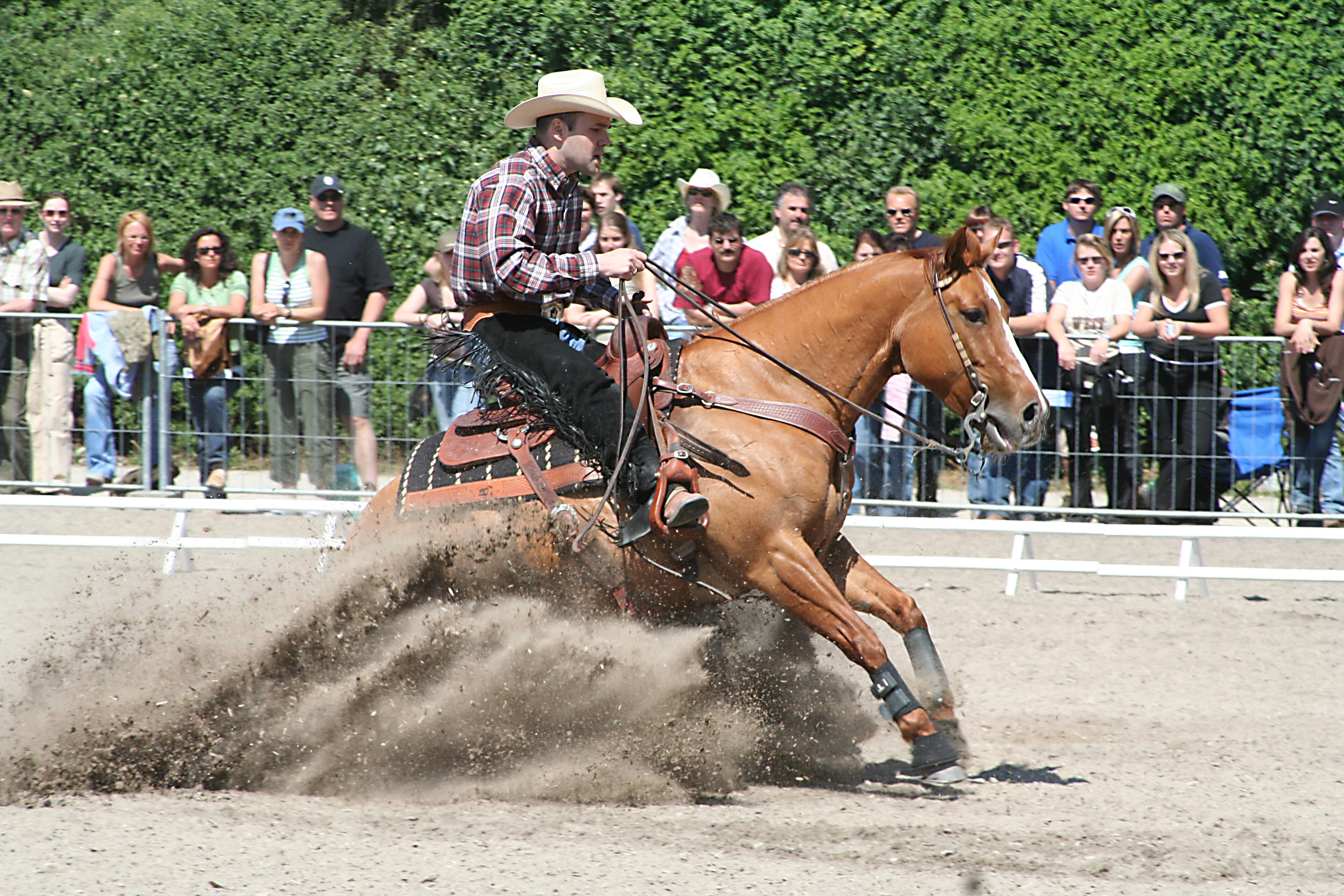
- Sliding Stop: This is the iconic move of reining ! The.horse gallops toward the end of the arena and, when signaled, sits deep on its hindquarters, planting its back feet and sliding several feet in the dirt.
- The Run-Down: The long, fast gallop leading up to the Sliding Stop.
- Spins: The horse pivots around a stationary inside hind leg, turning quickly and continuously for several rotations.Spins are fast and controlled turns that demonstrate the horse’s agility.
- Rollbacks: A sudden stop followed by an immediate 180-degree turn and a gallop in the opposite direction. It showcases the horse’s responsivenesss, going from a full stop to a full run without hesitation.
- Backups: The horse must back up a certain distance in a straight line, showing control and willingness.
How is Reining Scored ?
A reining pattern starts with a score of 70. Consider it as a “zero” score. From there, judges use a system of pluses and minuses for each maneuver:
- +0,5 to +1,5: For maneuvers performed better than average (Excellent).
- 0: For maneuvers performed exactly average.
- -0,5 to -1,5: For maneuvers that show errors or lack of quality (Poor).
For example, a super fast, deep, and long sliding stop might earn a +1. A spin that is too slow or sloppy might get a -0,5. The final score is the total of all the pluses and minuses added to the starting score of 70. The judge is looking for “Finesse, Authority, and Speed” in the execution of the moves.
The Team
The Rider
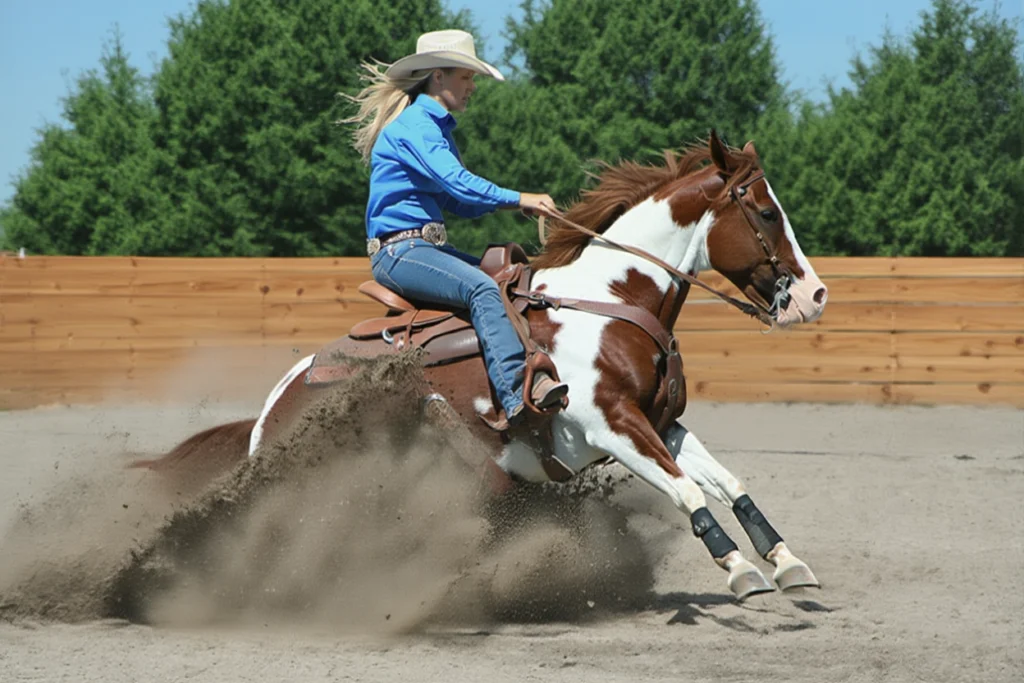
As a beginner, you might wonder how the rider manages to make the horse do all this without pulling hard on the reins. This is where the term “Reining” comes from!
The ideal reining performance looks effortless, which is a testament to the skill involved. Riders communicate using subtle, almost invisible cues:
- Neck Reining: Instead of pulling directly on the reins, the rider lays the rein against the side of the horse’s neck to guide the direction.
- Leg Cues: Small pressures from the rider’s legs tell the horse to speed up, slow down, or move sideways.
- Weight Shifts: A slight shift in the rider’s western saddle is often all it takes to signal a maneuver.
The Horse
The horses used in reining are true athletes. They are typically breeds like the Quarter Horse and the Paint Horse. Why these breeds ? Because they are known for their:
- Agility and Speed: Essential for the fast-paced maneuvers.
- Low Center of Gravity: They are built close to the ground, which helps them stay balanced when sliding and spinning.
- Trainability: They have a natural responsiveness and calm temperament that is perfect for the intense training required in horseback riding at this level.
Ready to Ride ?
Whether you’re just starting out in horseback riding or you’re considering a western discipline, reining is one of the most exciting and impressive sports out there. It’s a wonderful demonstration of trust, training, and athleticism.

Leave a Reply